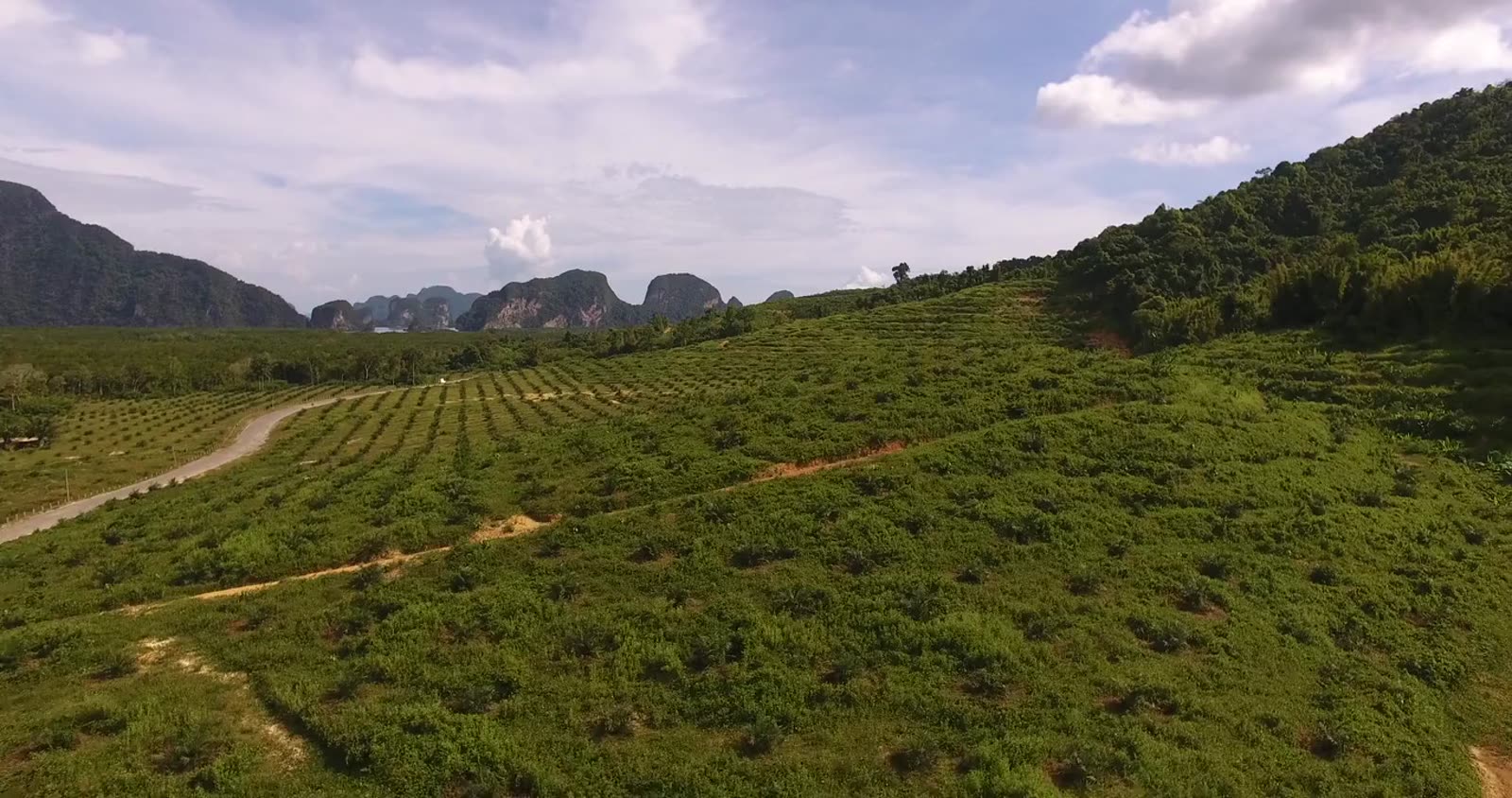


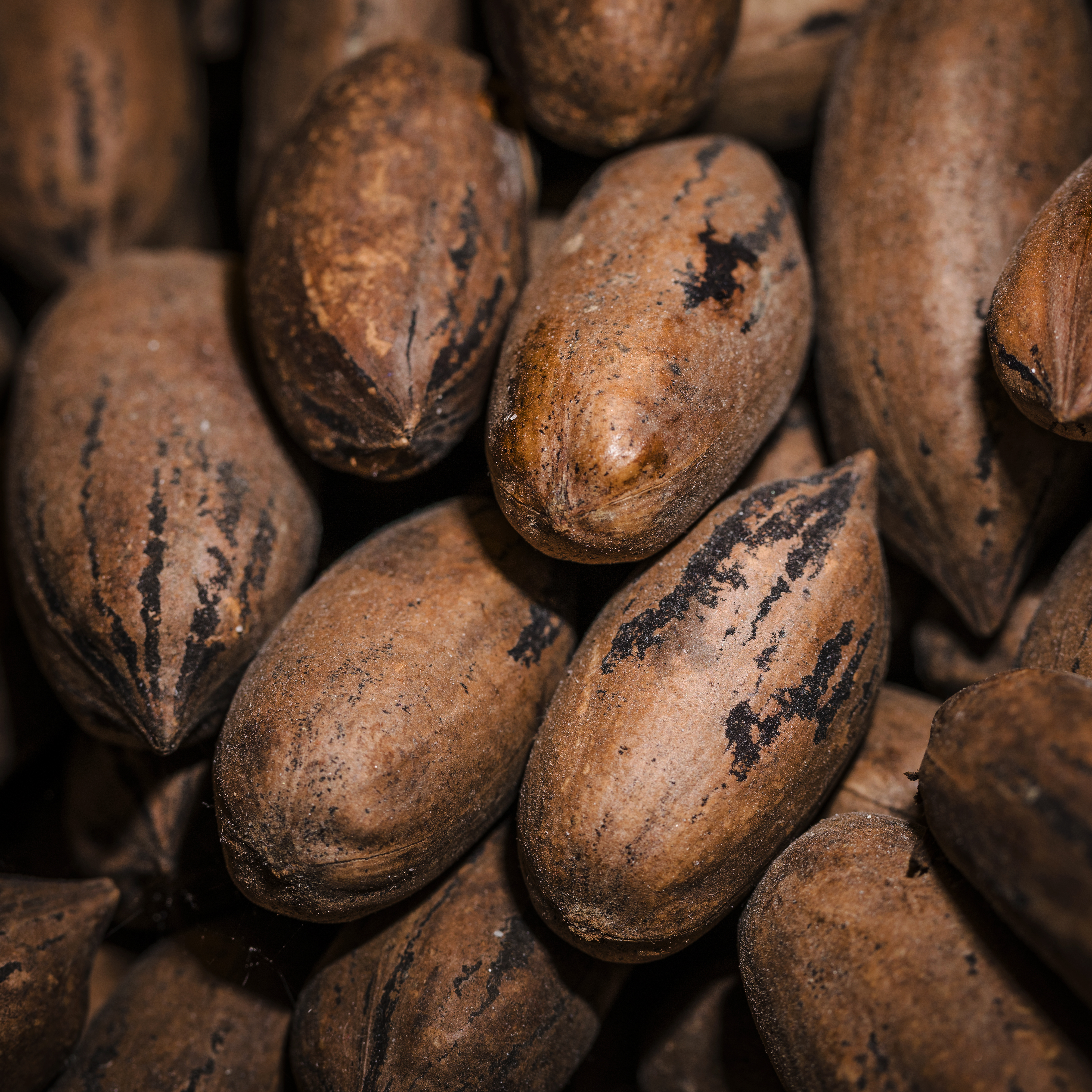
Cocoa beans are where everything begins. Naurits supplies carefully selected, fermented and dried cocoa beans from West and East Africa to chocolate makers, cocoa processors and food manufacturers who need consistent quality, clear documentation and dependable delivery.
Cocoa beans are the seeds of the cacao tree. Each pod, harvested by hand with a machete or a pole knife, holds thirty to fifty beans embedded in a sweet white pulp. Within hours of the harvest the beans are removed and piled in heaps or boxes to ferment for several days. The fermentation is not a detail of the process: it is where the precursors of chocolate flavour are formed, where the bitterness of the raw seed is softened and where the colour of the bean is set. After fermentation the beans are dried in the sun, usually on mats or raised tables, until their moisture falls to a level at which they can be stored and shipped without spoiling.
The quality of cocoa beans at the early stages of processing largely determines the properties of the final product. Correct fermentation and even drying help preserve the flavour, colour and fat content of the beans and give a high yield of nibs. Beans that are poorly fermented or insufficiently dried can give the product bitterness and an unbalanced flavour. Such defects cannot be corrected at later stages of processing. That is why we focus on selecting lots, checking how they were handled and assessing quality before shipment.
We supply whole cocoa beans for the production of cocoa mass, cocoa butter, cocoa powder and chocolate. Each lot is selected for bean size, appearance and flavour characteristics suited to industrial use. Every shipment is accompanied by documents confirming the origin of the goods and their route to the place of delivery.
OriginsWest Africa is the world’s main cocoa-producing region. The beans grown here are used for the mass production of chocolate. They have a rich, classic cocoa flavour and a good fat content, and are available in the volumes needed for large-scale production. West African beans therefore suit manufacturers for whom consistent quality and uninterrupted supply matter.
East Africa produces less cocoa, but its beans are valued for their variety of flavours. Depending on the region, fermentation and drying, they can have a lighter flavour and bright fruity or aromatic notes. This cocoa suits products in which origin and flavour characteristics matter, for example dark chocolate with a stated region of origin or handmade bean-to-bar chocolate.
Which beans suit you depends on your product, process and price category. Tell us what you produce and we will suggest suitable options, with samples where possible, before you decide on a full lot. Many customers use West African beans as the base of a recipe and add a share of East African beans to give it character.
SpecificationThe quality of cocoa beans is assessed on several main parameters, which are fixed in the contract. Fermentation affects the flavour and colour of the beans. Where necessary, we check it with a cut test. Moisture must meet the established requirements so that the beans can be stored and transported safely. Bean size also matters: the more uniform the beans, the more evenly processing proceeds. To assess size, the number of beans per 100 grams is specified. The share of mouldy, slaty, insect-damaged and germinated beans is controlled separately, as are foreign matter, which we check by visual and laboratory inspection. For deliveries to the EU, the established requirements for contaminants and residues are also taken into account. Analysis results and certificates are provided on request. The specification is agreed for each order and confirmed by the relevant documents.
The cut test is a traditional way of checking the quality of cocoa beans. The beans are cut lengthwise and assessed for the degree of fermentation and the presence of mould, slaty beans and insect damage. Where necessary, we arrange such a test, as well as laboratory analysis for contaminants. The results are provided together with the accompanying documents.
UsesCocoa beans are the basis of the whole cocoa industry. Processors roast and crack them and remove the husk to obtain nibs. The nibs are then ground into cocoa mass, from which cocoa butter and cocoa powder are produced. Chocolate makers use these products in combination with sugar, milk and additional cocoa butter to make dark and milk chocolate and couverture. Bean-to-bar chocolate is a separate segment. These makers buy whole cocoa beans and carry out all the processing stages themselves. For them, bean quality and origin are especially important.
Products made from cocoa beans are used not only in chocolate production but also in baking, the dairy industry, and the production of ice cream, beverages, breakfast cereals and confectionery fillings. Cocoa butter is also widely used in the cosmetics industry. The quality of all these products depends largely on the quality of the beans sent for processing.
StorageCocoa beans are a natural product and easily absorb moisture and odours, so they must be stored in clean, dry and well-ventilated conditions, away from goods with strong smells such as fuel, chemicals and spices. Bags should be placed on pallets, not in contact with the floor, and protected from rain and condensation. When dispatching, the FIFO principle is important: lots that arrived in the warehouse earlier are shipped first. Before loading, containers must be checked for cleanliness and dryness, and shipments should be planned to avoid prolonged exposure to high temperature and humidity.
We organise transport with all these factors in mind and advise on receiving and storage, to preserve the quality of the cocoa beans all the way from the country of origin to the customer’s warehouse.
PackingCocoa beans are usually transported in jute or sisal bags weighing 60–70 kg net. The bags are placed on pallets and secured with stretch film for easier loading and unloading. For large volumes, bulk shipment in containers with a special liner is possible if the consignee has the equipment to receive such cargo. Standard 20- or 40-foot containers are used. The type of packing and the loading plan are agreed individually for each order. The stated parameters are typical and may change depending on the delivery terms.
DeliveryCocoa beans from West and East Africa are delivered by sea in containers or in bulk, and are then transported to the buyer’s plant by rail or road. We organise delivery at all stages and calculate the cost according to the chosen delivery terms: FOB at the port of departure, CIF to the port of destination, DAP to your door, or any other Incoterms. Each lot is accompanied by the necessary documents: a commercial invoice, packing list, bill of lading, certificate of origin and documents confirming the quality of the goods. So that we can offer a suitable option, tell us the required volume, delivery terms and desired date of receipt. We will assess and propose the available options and realistic delivery times.