


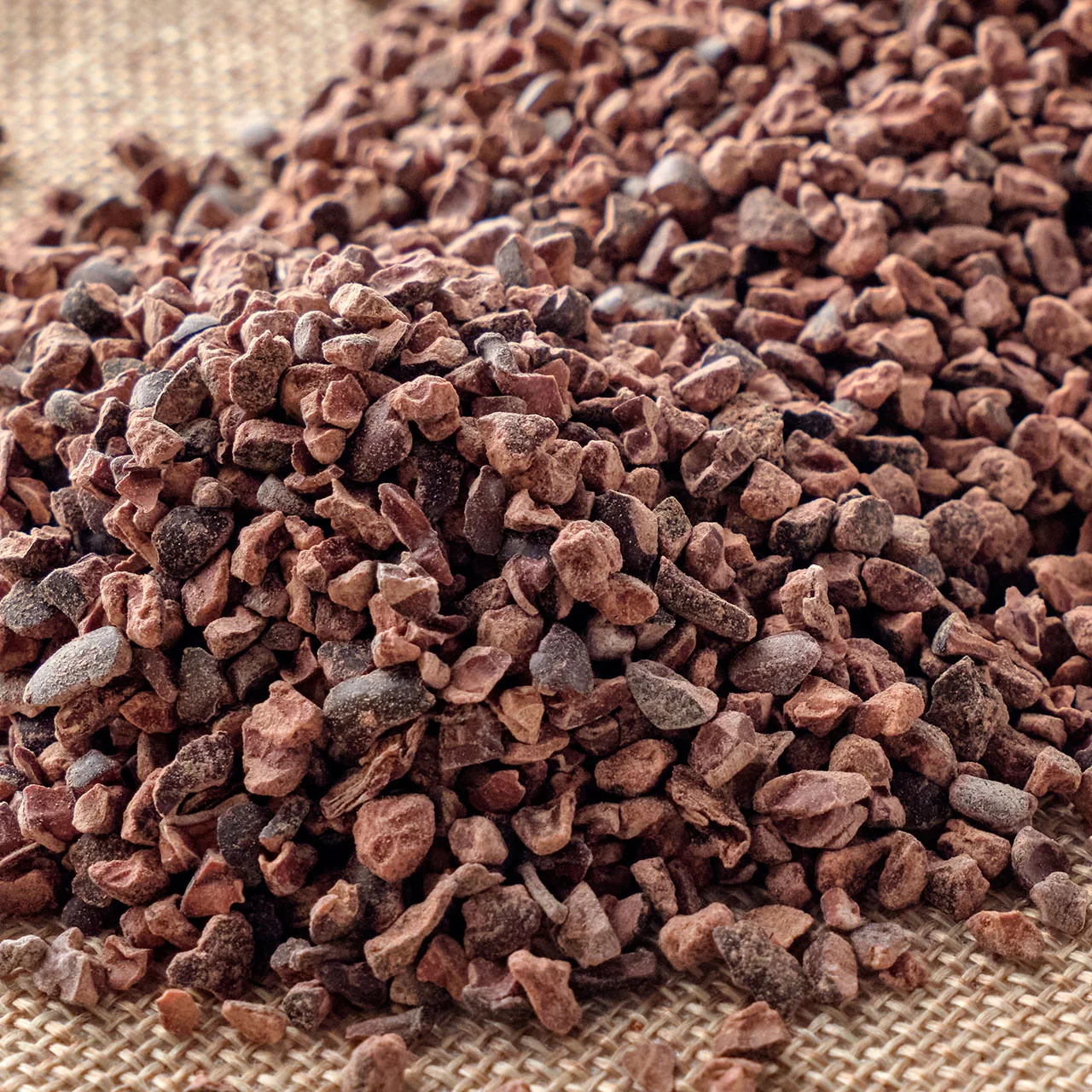
Cocoa nibs are roasted cocoa beans broken into small pieces and cleaned of their shell. Nothing is added and nothing is removed except the husk, so what remains is pure cocoa with a deep chocolate aroma and a pleasant crunch.
To obtain nibs, fermented and dried cocoa beans are cleaned, roasted, cracked and separated from their shell. During roasting the main chocolate flavour is formed: under heat, sugars and amino acids react, the beans lose moisture, and their aroma becomes rich, warm and characteristic of cocoa. After roasting, the brittle shell is separated in a current of air, leaving small pieces of the bean’s kernel – cocoa nibs.
These pieces are rich in natural cocoa butter, with a strong, slightly bitter chocolate taste and a distinctive crunch. They contain no added sugar, fat or flavouring, which makes them popular in modern, clean-label recipes, and they deliver the full flavour of cocoa in a form that needs no further processing.
Nibs occupy two places in the industry. For processors, they are the stage from which cocoa mass is obtained by grinding. For food producers, they are an ingredient in their own right, used wherever the flavour and texture of real cocoa are needed. Naurits supplies nibs for both kinds of use. For their production, quality beans are selected and cleaned of their shell according to the customer’s requirements.
SpecificationThe value of cocoa nibs is determined by a few measurable parameters. Because nibs are often used without further heat treatment, cleanliness and microbiological safety are particularly important.
The particle size is agreed with each customer to ensure even processing and baking. The degree of roasting – from light to medium – is chosen according to the requirements for flavour, colour and bitterness of the product. To preserve shelf life, a permitted moisture level is set and recorded in the contract. On request, Naurits provides processing and microbiological test results, as well as analysis reports and certificates confirming compliance with EU requirements for contaminants.
Shell content is an important quality indicator of cocoa nibs. It cannot be removed completely, but an excess spoils the texture and taste of the product, making it too hard and bitter, and may also raise the level of certain contaminants. The permitted shell level is agreed with the customer, and the analysis results for each lot are provided on request.
UsesIn chocolate production, nibs are ground into cocoa mass, from which chocolate, cocoa butter and cocoa powder are obtained. In baking they are added to cookies, bread, brownies, bars and pralines, where they create a bitter, crunchy contrast to sweetness and a real cocoa flavour that flavourings cannot match. Makers of cereals, granola, muesli, snack mixes and bars add them as a natural ingredient, and in yoghurts, ice cream and desserts, smoothies and infusions they are used as a topping.
Cocoa nibs make it possible to use cocoa in its minimally processed form. This is especially important for manufacturers who want to emphasise the naturalness of the product on the label.
StorageCocoa nibs should be stored in a cool, dry and clean place, away from strong odours and direct sunlight. They easily absorb moisture and odours, so it is important to use airtight, food-grade packaging. All tools and equipment that come into contact with them must be clean. Since the product is often consumed without further processing, hygiene is especially important. When storing stock, follow the FIFO principle: products that arrived earlier are used first.
We agree with you on the packing requirements and handling conditions so that the nibs reach you in a condition that meets the requirements of your quality department.
PackingCocoa nibs are packed in multi-layer paper bags or bags with a plastic liner weighing 20–25 kg. This packing protects the product from moisture and foreign odours. The bags are placed on pallets and wrapped in stretch film for easier loading and transport. For industrial consumers, larger bags are available on request. The loading of standard 20- or 40-foot containers is determined individually for each order.
Cocoa nibs are usually delivered by sea in containers and then transported by rail or road. Dispatch from the Naurits warehouse in Tallinn is also available: even a single pallet can be collected or sent on within a few days.
DeliveryMost customers choose EXW Tallinn terms or delivery directly to their plant. In both cases the cost is calculated on the same principle. Other Incoterms are available on request. Each delivery is accompanied by the necessary documentation: a commercial invoice, packing list, certificate of origin and test results for the specific lot.
Cocoa with a transparent origin and delivery by the promised date.
Contact us to receive a commercial offer, specification and an agreed delivery schedule.