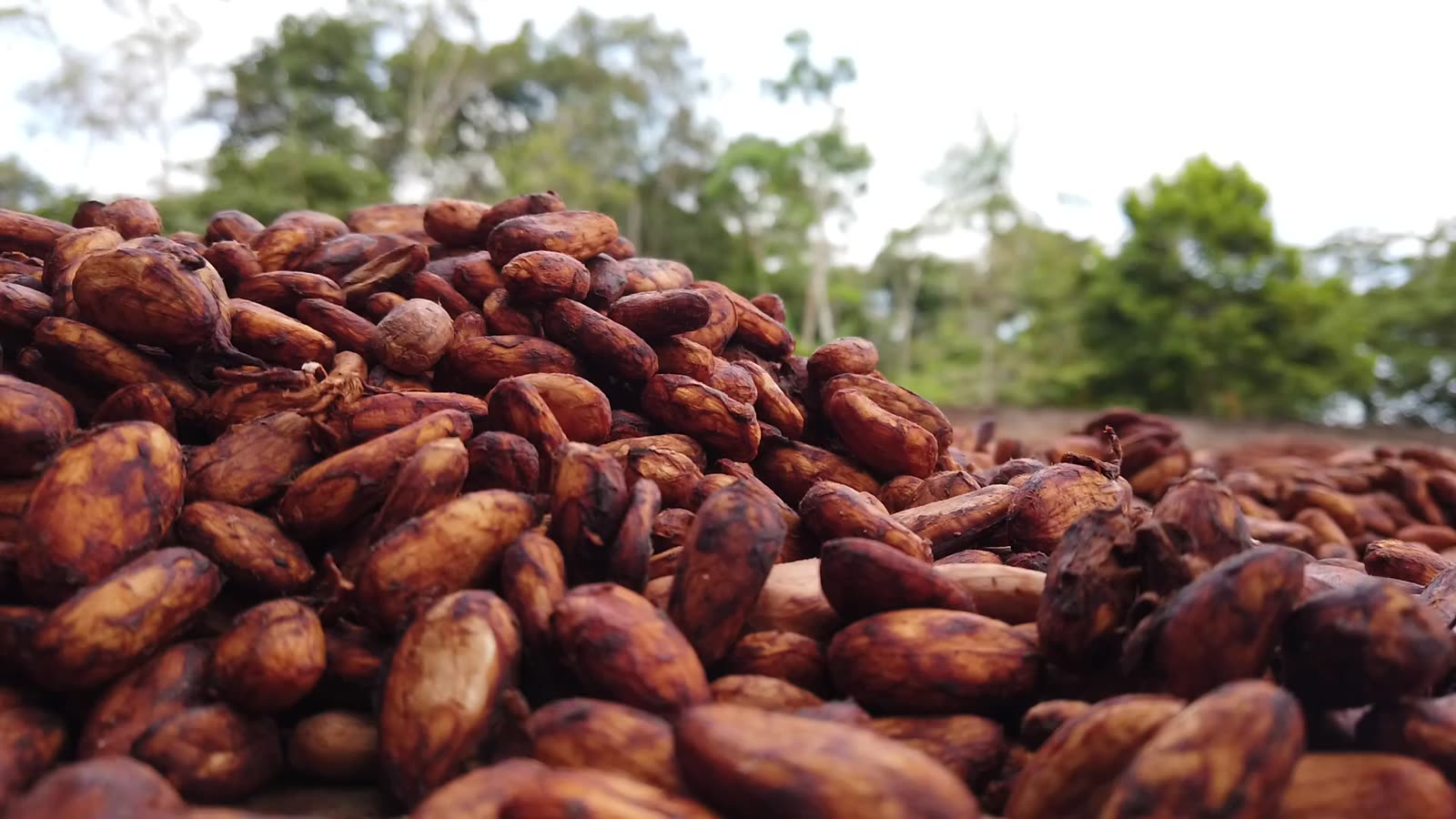


All our products are made from the same raw material – cocoa beans, which go through several successive stages of processing. At origin the beans are fermented and dried, then roasted and cracked into nibs, which are ground into cocoa mass, and the mass is pressed into butter and powder.
Naurits purchases raw materials at origin, keeps stock in Tallinn and supplies products at each of these stages. This allows chocolate makers to buy cocoa beans, bakeries to buy cocoa powder, and companies that need several products in small volumes to get everything in a single order, on one invoice and with one delivery.
Below we briefly describe each product. More detailed information on specifications, packing and applications is given on the individual pages.
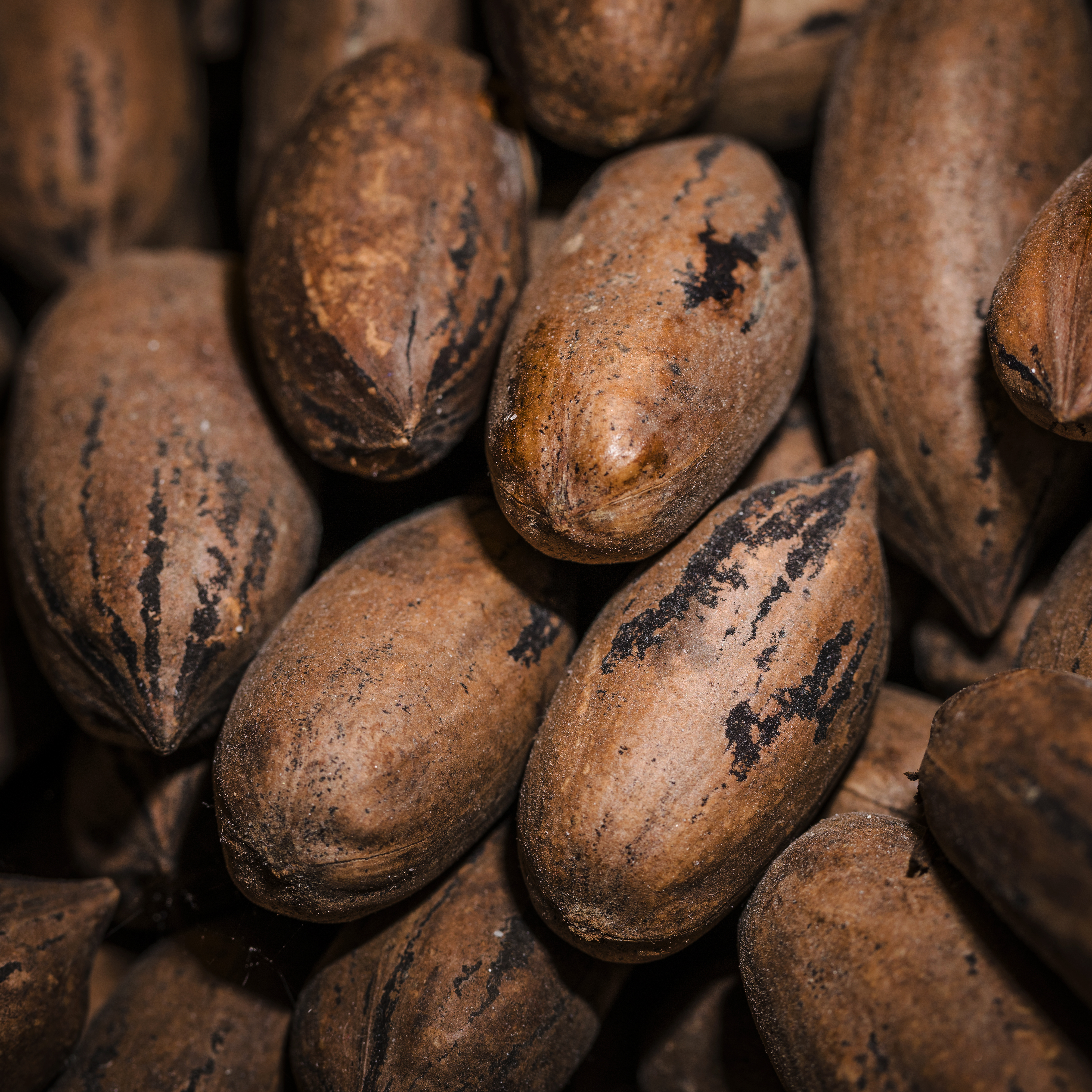
Cocoa beans are the original raw material, and the final product depends to a large extent on their quality. The pods are cut by hand on small farms in West and East Africa, the beans are fermented for several days in heaps or wooden boxes and then dried in the sun. When the process is followed correctly, the beans acquire an even brown colour, the characteristic cocoa aroma and a clean break when cut. Mistakes in fermentation and drying cannot be made up for by later processing, which is why the foundation of cocoa quality is laid here.
We purchase cocoa beans in West and East Africa. West African beans form the basis of many chocolate recipes: they have a rich cocoa flavour, a rounded profile and a stable fat content, and are available in the volumes needed for industrial production. East African beans are supplied in smaller quantities and are valued for their individual character: they tend to have a lighter body and a pronounced aroma. These beans are chosen by manufacturers for whom the origin of the raw material and its flavour features become part of the chocolate’s story.
For each lot we agree on moisture, bean count per unit of weight, total defects, and the share of mouldy, slaty and insect-damaged beans. At the buyer’s request we arrange a cut test and laboratory analysis. The results are attached to the accompanying documents. Cocoa beans are supplied in bags on pallets or in bulk in containers. Our main buyers are chocolate makers, cocoa processors and bean-to-bar workshops.
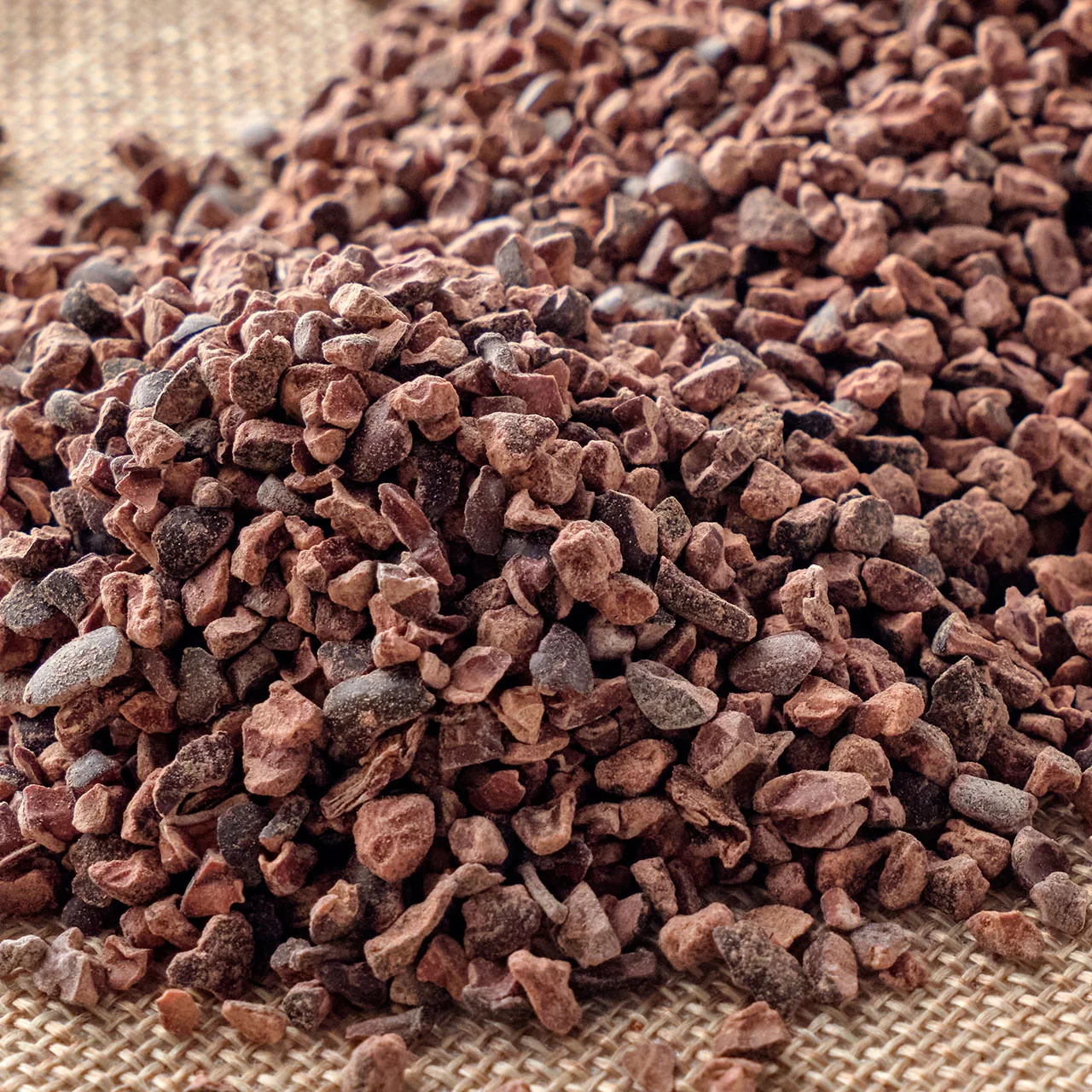
Cocoa nibs are roasted cocoa beans broken into small pieces and cleaned of their shell. Nothing is added and nothing is removed except the husk, so nibs keep the natural taste of cocoa: rich, dark, with a light bitterness and fruity notes. Their texture is crunchy, and the taste is noticeably different from familiar chocolate.
Roasting is the key stage at which the flavour of cocoa is formed. Under the effect of heat, the sugars and amino acids in the beans react, moisture evaporates, and the sour smell of fermented beans turns into the warm, characteristic aroma of chocolate. After roasting, the beans are cracked and the light shell is removed in a current of air. The result is cocoa nibs, consisting of solid bean particles and rich in cocoa butter, which makes up about 50% of the bean’s weight. A nib is therefore not only a solid raw material but also a significant source of fat.
Processors use cocoa nibs as the raw material for cocoa mass. Bakeries and producers of ice cream, bars, granola and snacks choose them as an ingredient in their own right: even a small amount of nibs gives a product a rich cocoa flavour and a characteristic texture without added sugar. We supply cocoa nibs in bags or cartons on pallets, with a degree of shell removal agreed with the buyer.
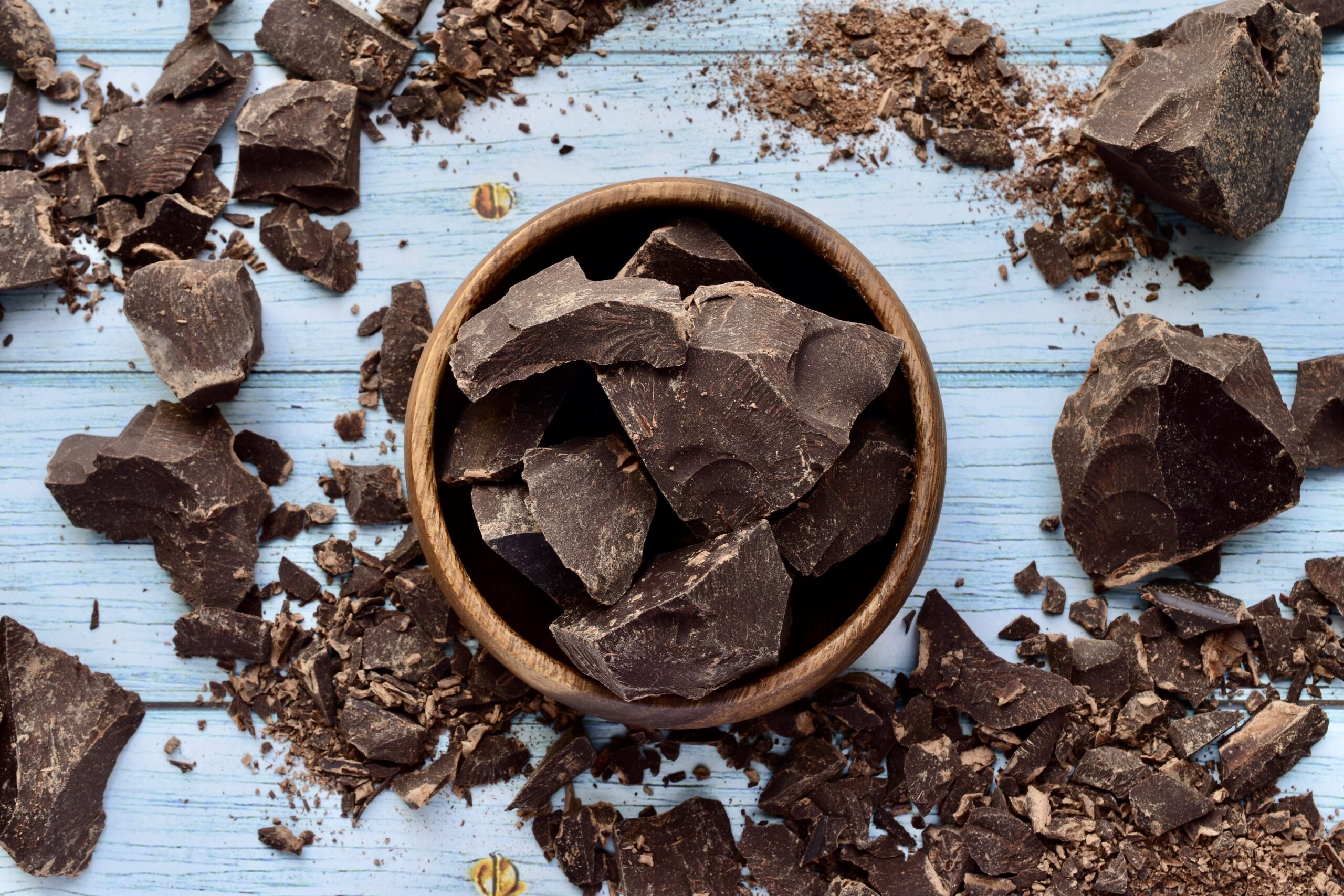
Cocoa mass, called cocoa liquor in the trade (it contains no alcohol, the word only describes its state while warm), is what nibs become when they are ground fine enough for the cocoa butter to melt. The paste that comes out of the mill is smooth, dark and runs like thick syrup, and when it cools it sets into a hard block.
Cocoa mass contains all the components of the cocoa bean – solids and cocoa butter – in their natural proportions, without any additives. It is the basis for making chocolate: sugar, milk powder and additional cocoa butter are added to the mass, after which the mixture is refined, conched and moulded into bars. The same raw material goes under the press when cocoa butter and cocoa powder are made.
Our cocoa mass is made from West African beans and has a balanced acidity and a rich chocolate flavour, suitable for both dark and milk chocolate. Bakeries and ice-cream makers also use it in recipes where a deeper, more expressive flavour is needed. Cocoa mass is supplied in solid form, in cartons on pallets. It must be melted gently before use.
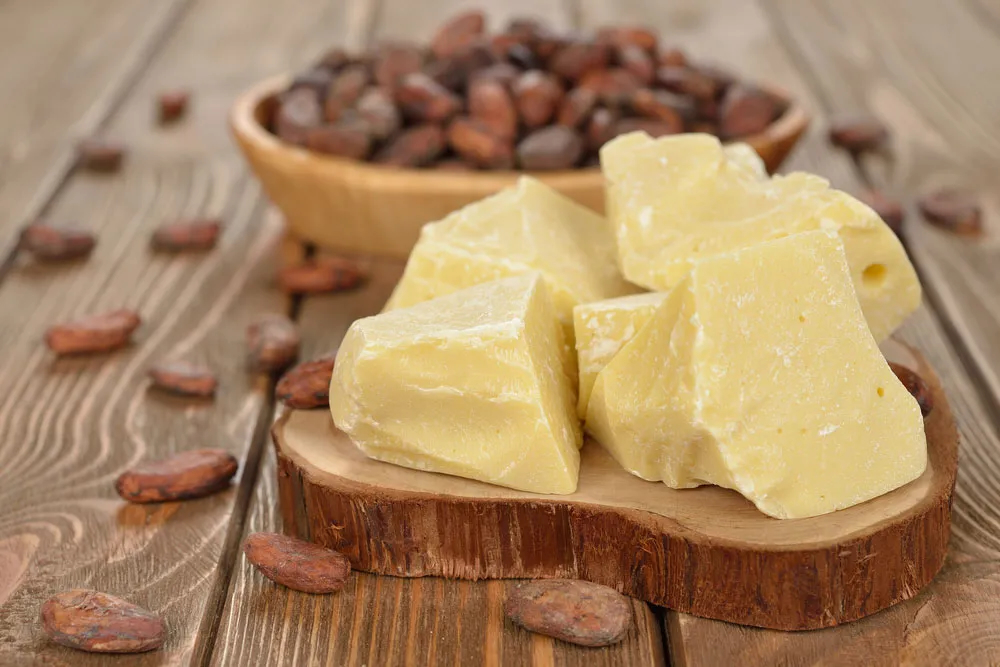
Cocoa butter is a natural fat obtained from cocoa mass by pressing under high pressure followed by filtration. It is pale yellow, mild in aroma, and stays hard at room temperature but begins to melt just below body temperature. It is this melting range that gives quality chocolate its characteristic texture and makes it literally melt in the mouth. The unique properties of cocoa butter are hard to reproduce with other vegetable fats.
In chocolate, cocoa butter is responsible for the gloss, the characteristic snap and the smooth texture in the mouth, and when properly tempered it crystallises evenly and keeps the surface shiny for months. Manufacturers add it to dark and white chocolate, couverture and coatings, and also use it in bakery fillings, cosmetics and skincare products, where its stability and softness are valued.
We supply natural cocoa butter from West African beans. It is not deodorised, so it keeps a light characteristic cocoa aroma. Cocoa butter is highly resistant to oxidation and keeps well when stored properly: in a dry, cool place, away from foreign odours. The product is supplied in cartons on pallets. The specification is agreed taking into account the buyer’s requirements and production specifics.
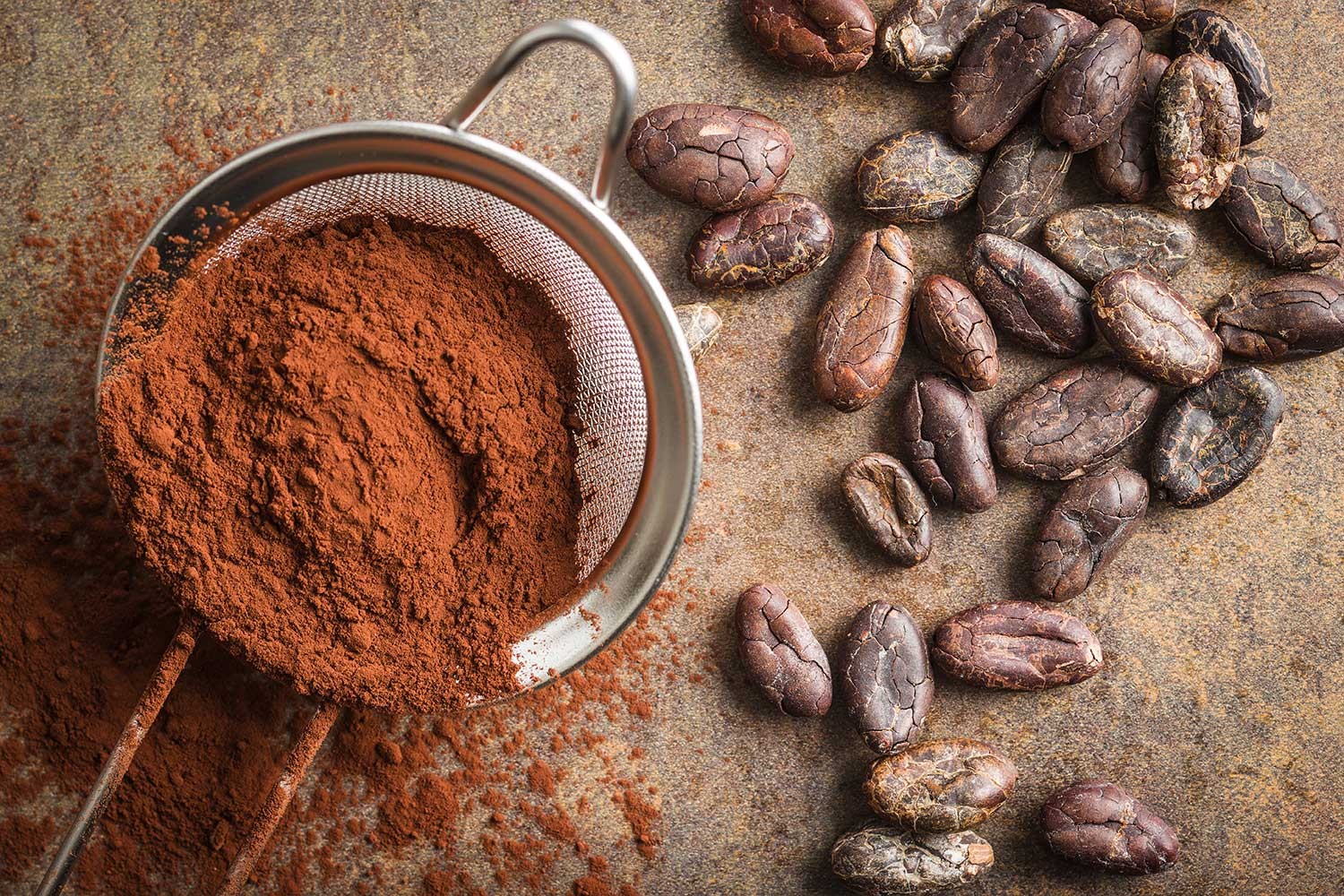
Cocoa powder is made from cocoa mass: after pressing, which removes most of the cocoa butter, the remaining cake is ground and sieved. It gives colour and rich flavour to bakery goods, dairy products, desserts, drinks and fillings. Its flavour, colour and properties depend on fat content, fineness and alkalisation.
Natural cocoa powder keeps the natural acidity of the beans. It has a lighter, reddish-brown shade and a pronounced flavour with fruity notes. Thanks to its acidity, it reacts with baking soda, which matters in some baking recipes. Alkalised cocoa powder is treated with an alkali to raise its pH. The more intensive the treatment, the darker the colour and the milder the flavour of the powder. It also mixes better with milk and water.
We carry five grades. IC1 is natural powder of standard quality, reddish-brown with the pronounced acidity of cocoa, a practical choice for everyday use. ICP is natural powder of premium quality, with a cleaner, fruitier flavour and a more refined colour. A6 is premium powder with light alkalisation, warm brown and mild. A7, with medium alkalisation, is deeper in colour and smooth and balanced in taste. A8 is the dark alkalised grade, very dark, with a mellow flavour that suits chocolate biscuits and dark drinks.
The choice of cocoa powder depends on the desired colour, flavour and budget. The range and availability of different grades change with the season and the lot. Tell us which grade you need and in what quantity, and we will propose the available delivery options.